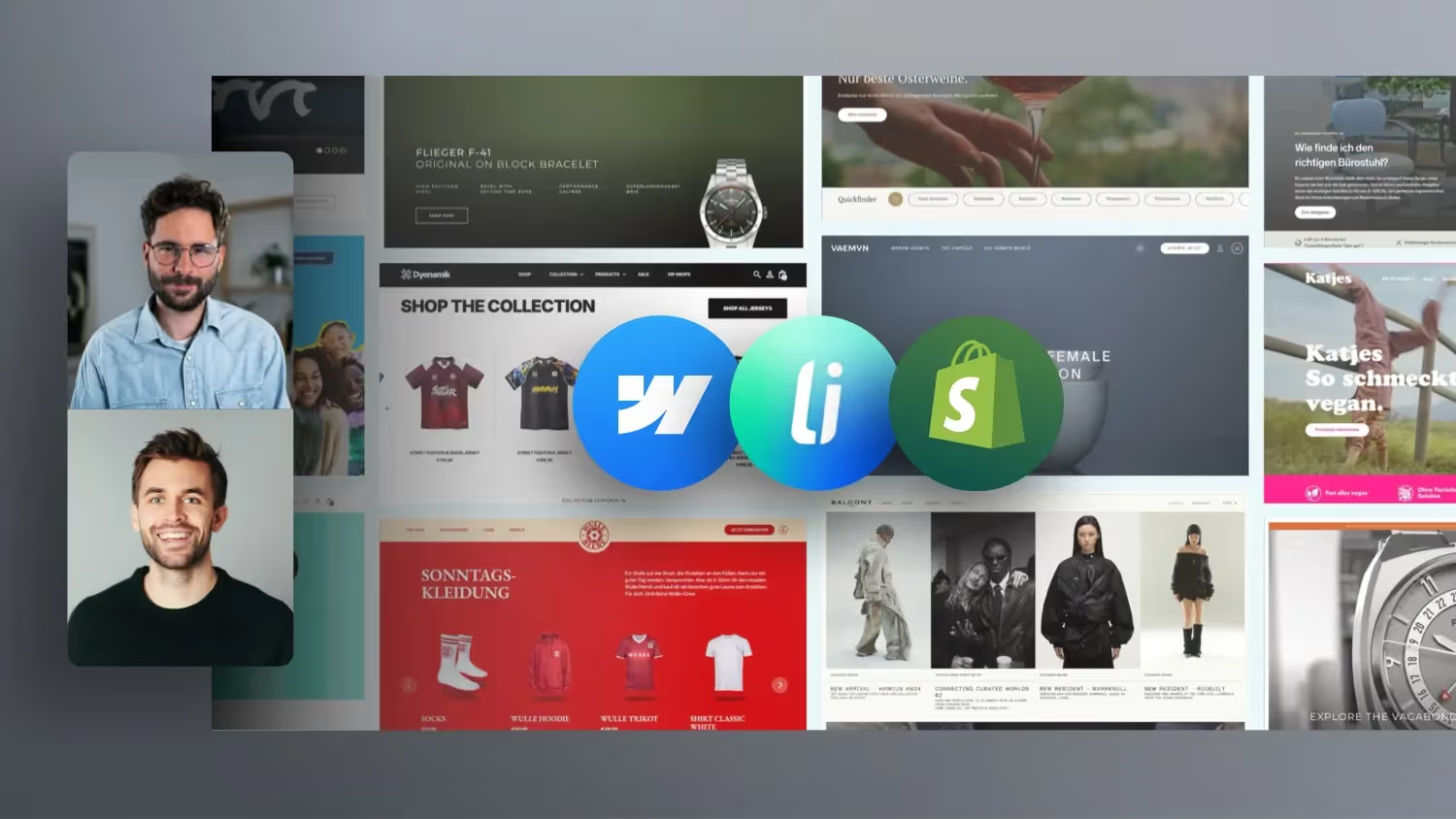
Is Webflow Leaving Developers Behind? Webflow Conf 2024 Reaction


In this episode of the Formburg podcast, Jonas and Dennis Karg discuss the latest developments in the Webflow community, the feedback on Webflow Conf 2024 and the new features that were presented. They highlight the integration of AI, the adoption of GSAP for animations, the new component styles, and the usability of page building. In addition, the new analysis tool and the associated data protection issues will be addressed
Watch Webflow Conf 2024 on YouTube
They also take a look at the challenges and future of Webflow. It also discusses Webflow's current market position in Europe, the challenges and opportunities in the area of analytics, pricing and the future of Webflow as a digital experience platform. They highlight the importance of A/B testing, the impact of client billing, and skepticism about the development of Webflow e-commerce. In addition, the need for improvements in user experience and the challenges of dealing with cookies are discussed.
Dennis Karg online
- Agency: https://www.vibranddesign.com
- Dennis Patreon: https://www.patreon.com/denniskarg
- German-speaking Webflow Discord community with over 1,200 members: https://discord.gg/eve7Gq6Sz7
Takeaways
- The Webflow conference presented new features that are more focused on marketers.
- Page building is highlighted as an important new feature.
- The integration of AI with Webflow is considered promising but not yet fully developed.
- The acquisition of GSAP is considered to be strategically sensible.
- Component styles offer new options, but there are still limitations.
- The ease of use of page building could make things easier for marketers.
- The new analysis tool has raised privacy concerns.
- Webflow's performance could be affected by the wide range of features.
- The future of Webflow depends on its ability to adapt to users' needs. Webflow has established itself as a major market leader in Europe.
- Provide analytics tools like Fathom a user-friendly alternative to Google Analytics.
- Webflow's pricing could scare off potential users.
- A/B testing is crucial for optimizing websites.
- Webflow aims to become a comprehensive digital experience platform.
- Client billing has both advantages and disadvantages for users.
- The future of Webflow e-commerce remains uncertain and skeptical.
- The integration of cookies and consent management is a complex issue.
- There is a huge need for improvements in the Webflow platform.
- The development of Webflow could be influenced by internal decisions.