Why Does Webflow Localization Cost Money?
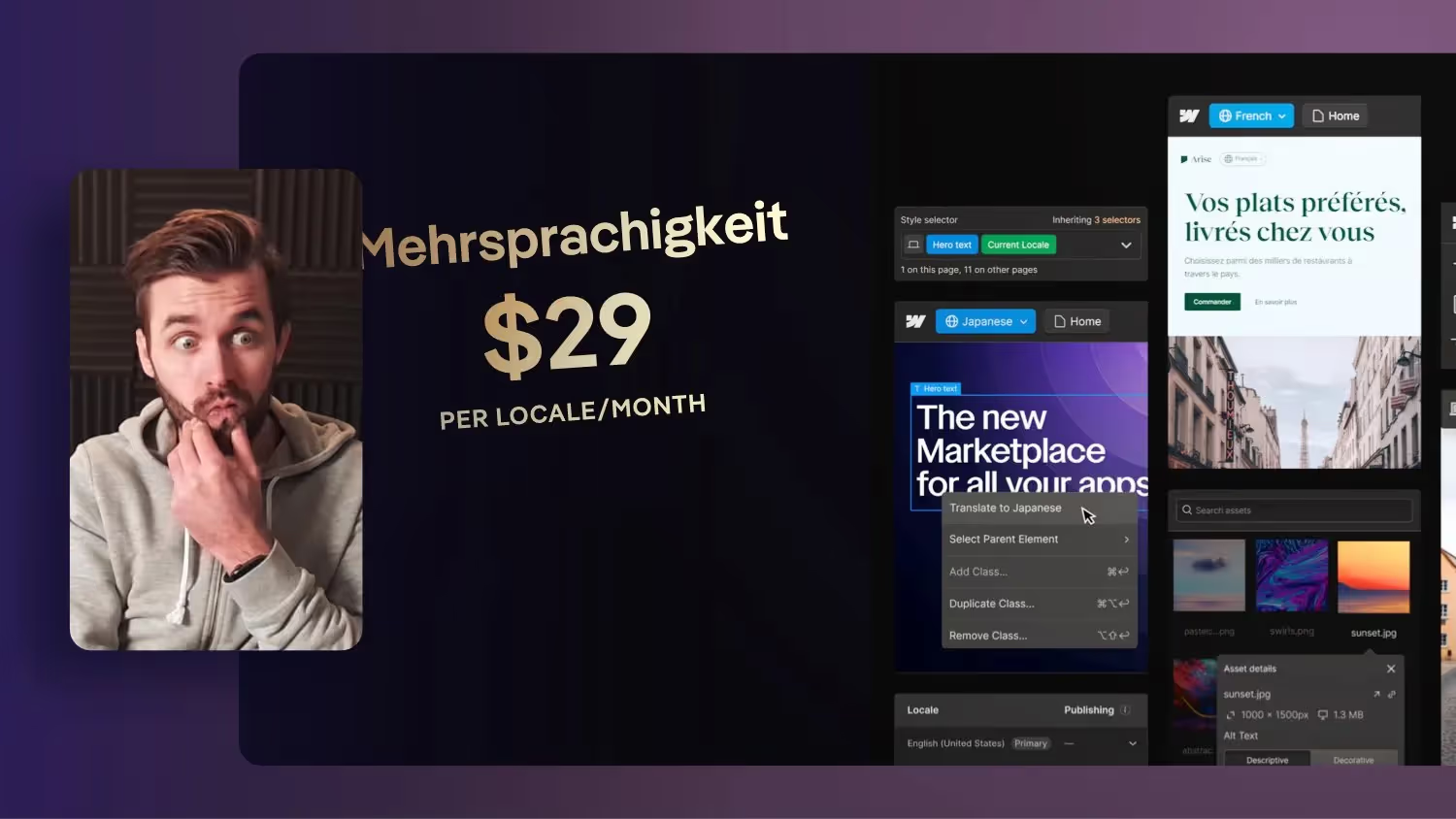

This podcast episode is about Webflow Localization, a new feature for multilingual websites. The introduction in November 2023 will be chargeable, which triggers discussions. Investing in multilingualism is examined from a customer perspective and Webflow's pricing model is explained in the context of company growth. A comparison with Weglot shows that Webflow prices are definitely competitive. Multilingualism expands reach and opens up business opportunities. In summary, Webflow Localization offers exciting opportunities for web designers and can be profitable in the long term.
Webflow Localization: Why the pricing model makes sense
In this podcast episode, I'm talking about Webflow Localization, which allows web designers to build multilingual websites in Webflow. But it's not just about the function itself, but also about the pricing model and the options it offers us.
The Webflow Localization Feature
The developers plan to roll out a feature in November 2023 that allows Webflow users to create multilingual websites. That sounds exciting, doesn't it? But there is a catch: This feature will be chargeable. This has, of course, sparked some discussion.
My thoughts about the customer perspective
I was wondering when it would make sense for customers to offer an additional language on their website. In principle, it is a good idea if the customer benefits from it. Finally, they invest in projects to expand their business and expand their reach. The decision for multilingualism should therefore bring clear benefits, and then it also makes sense for your customer projects.
Webflow's pricing model and growth
Webflow has already adjusted its pricing model in the past to keep pace with growth and increasing demands. Such adjustments are necessary in the business world to ensure sustainable growth. The introduction of plurilingualism is just another stage in this development.
Webflow compared to the competition Weglot
I also took a look at the competition and found that Webflow competes with one of the main competitors, Weglot, when it comes to multilingualism prices. Webflow offers more languages at a lower price. This could result in many web designers relying directly on Webflow to implement their multilingual projects.
Why invest in multilingualism?
It is important not to take the investment in multilingualism lightly. The decision should be well thought out, and one should consider the customer's specific requirements and potential benefits. Multilingualism can significantly increase reach and open up new business opportunities. The investment could prove extremely profitable over the long term.
Webflow Localization Features and Customizations
In my podcast, I also presented the various features of Webflow Localization. This includes translating text elements into different languages, adapting the design depending on the country, and translating the CMS content. These features provide web designers with a comprehensive solution for implementing multilingual websites.
My conclusion
In summary, Webflow Localization is an exciting development for web designers. It offers the opportunity to implement multilingual projects and increase reach. Webflow's pricing model is competitive, and the features are impressive. This investment could prove extremely worthwhile and will enable us to successfully implement our projects in a globalized world. It will be exciting to see how this development is affecting practice and how we will use it to drive our projects forward.

%2520unno%25CC%2588tig-blog.avif)